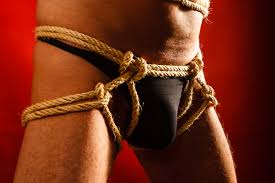




Want to feel maximum pleasure during your sexual encounters? Try the Pleasure Mapping technique. Sensuality and excitement guaranteed!
It is common knowledge that women reach orgasm with more difficulty than men. And besides, the latter is not mandatory in every sexual encounter. Yet, there are techniques that ensure maximum pleasure for both partners during a roll in the hay. Because even if you don’t climax every time, you can still have top-notch pleasure. So, introduce yourself to the joys of « pleasure mapping, » which promises to take you to seventh heaven like never before.
The idea is simple in itself. It encourages you to explore your body as much as your partner’s. You thus set out in search of each other’s different erogenous zones, especially the most sensitive ones, to vibrate intensely. From the nape of the neck to the nipples, via the armpits or the inner thighs, it’s not just the intimate parts that need to be stimulated.
Pleasure Mapping: User Guide
While the technique may bring to mind slow sex or tantrism, it has a small difference. Indeed, here, we seek the most sensitive point(s) to optimize pleasure.
So, total surrender to sensual caresses, whether for two or solo. Play with different degrees of pressure. Imagine the other’s body as a map of pleasure to explore. Glide from zone to zone, taking your time with tenderness, delicacy, or a hint of wildness depending on your preferences. Add some sexy and languorous kisses, as well as little nooks you’ll tease with your tongue. Let your hands wander to the place where each can reach ecstasy.
Pleasure Mapping is a new approach to taming the sexual act, like an erotic massage. Sex is not necessarily an endpoint, but rather a new intimate way of communicating. And it’s exciting. Very exciting.
Why is it difficult to identify your pleasures?
Here is the English translation of the provided HTML content, following your instructions exactly.
« `html
There are many reasons why people struggle to name what feels good to them. We live in a culture that is both obsessed with sex and sexually negative. If the things that feel good to you don’t match what you think they are supposed to be, or if you fear they don’t match what you think your partner thinks they are supposed to be, it is easy to get stuck in a shame spiral and avoid asking for what you want.
But more than that, many people don’t really know how to describe what makes them feel good. Telling a partner something like « I like light circles on my clitoris » or « it feels good when you circle my glans with your tongue » requires a degree of specificity that many people cannot put into words. In some ways, this is more difficult for people with vulvas. Indeed, much of the sexy action is difficult or impossible to see. People with penises can look down and take a peek at what is happening, at least for some activities.
« `
There are a few different strategies that people say they have tried…
Some people will make comments to a partner, using words, sounds, or body language, to let them know when they are doing something that feels good. While this can help in the moment, it doesn’t make it easier to ask for it in the future. The best you can do is ask them to « do what you did that one time. » This might work, but only if they remember exactly what it was. Plus, it doesn’t transfer from one partner to another.
Another approach is to try to be patient while your partner attempts to guess what you would like, as you both hope for the best. This can be a bit like trying to throw a dart at a dartboard with your eyes closed—it requires more luck than you might think. And if your partner unknowingly does something that doesn’t feel good to you, you may end up enduring unpleasant touching. By the time they switch to something else, your arousal is gone and resentment has set in.
Sometimes people try to make themselves enjoy whatever their partner does. But this is about as effective as trying to make yourself like food or music that isn’t to your taste. Whether it’s a sexual act you never find enjoyable or something you might love another time… but not tonight… There’s no way to force yourself to enjoy something when it’s not the right thing, the right time, or the right situation.
Allow time for experimentation
The goal of a Pleasure Mapping session is not to have an incredible orgasm, although that is certainly not a problem if it happens along the way. Instead, the goal is to gain insight into what feels good for your body. Think of it like a wine tasting. You will try many different things, just to explore how they feel.
If you experiment with a dozen different types of sexual stimulation and discover three that are amazing, that is a win. It doesn’t matter that there were nine others you didn’t like. All that matters is figuring out the three (or six or one) that you do.
Set aside at least an hour for this. The more time you can take, the more you can relax and follow your body’s signals. Just like with a wine tasting, you will get the most out of the experience if you don’t rush.
Faites preuve de créativité
The whole point of Pleasure Mapping is to try lots of different things. If you don’t know what that looks like, get a book or a movie. Just make sure you don’t get lubricant or bodily fluids on your keyboard or remote control!
Chauffez-vous un peu
Sexual arousal changes the way we process sensations. That’s why being bitten on the neck during a fun sexual experience is different from being bitten on the neck while writing an email. If you build up a certain erotic charge before moving on to pleasure mapping, it will be easier to get a precise idea of what each technique might feel like during a sexual situation.
Comment donner un feedback
Now that you’re warmed up, you can start with pleasure mapping. Try one of the techniques and focus on tracking their pleasure. There are several ways to do this.
Some people like to rate it on a scale of 1 to 10, where 10 means « never stop doing that! » and 1 is « maybe we should put on Netflix. » Other people have difficulty using numbers or words because it takes them out of their body and into their head. If that’s you, you can give a thumbs up, squeeze your partner’s arm or leg, or simply say « yes. » It’s also helpful to have a non-verbal signal for « stop doing that. »
How to Receive Feedback
The most important thing to remember when receiving feedback during a Pleasure Mapping session is that your partner is evaluating the technique, not your skill as a lover. After all, you might be an extraordinary chef, but if I hate the taste of cilantro, I’m not going to like your ceviche.
While it’s good for everyone to keep this in mind, I find it even more valuable for men. We often have our ego wrapped up in our sexual skills because of the « Act Like a Man » idea. And we often take it personally if a lover tells us they don’t appreciate something we’re doing. A good way to avoid getting caught in that shame loop is to remind yourself that your partner is talking about the technique, not you as a person or as a lover.
I find there are two easy steps you can follow to do this. First, once you’ve done a particular move for a little while, ask your partner to tell you how they rate it. This makes you an active participant in the pleasure mapping and reminds you both that the intention is to collect data. Second, whatever their response, thank them for sharing it with you. This is a great way to keep yourself from getting too caught up in your ego. And it helps them give better feedback because they know it’s welcome.
Utilisez les commentaires
Here is the English translation of the provided HTML, with all HTML tags, URLs, and attributes preserved exactly.
« `html
When your partner rates something a 6 or higher (or when they squeeze your arm or say « yes »), mentally note this movement because it is a keeper. If you have trouble remembering it, you can even write it down. After the Pleasure Mapping session (or during, if it doesn’t kill the mood), describe what you were doing. Try to put it into words, but if that doesn’t work, you can also demonstrate it. For example, if your partner likes having their clitoris sucked, show them with your fingertips. Show them how much pressure they like on their G-spot or prostate by using your fingers on the back of their hand. Or if you were using a film as a guide, go back to that technique so they can watch it.
This is probably the most important step because it is how they learn to describe what they want to ask for. « Make firm circles on my prostate » is much easier to understand than « do that thing with your finger. »
You can also use their feedback to look for patterns in their sexual response. For example, you might tell them they like a light touch on the head of their penis and firm pressure on their testicles. Or circles on their clitoris and « come here » motion on their G-spot. Or a light touch at first, with more intensity later. Whatever the patterns or combinations, you will give them the incredible gift of knowing more about their sexual response and how to share that information to make a request during sex.

« `
Essayez autre chose
Once you have tried a technique and rated it, move on to something different. If you find a movement that feels amazing (like a 9 or a 10), feel free to stick with it for a bit, but don’t lose sight of the main goal of Pleasure Mapping. You can always come back to that movement later.
In addition to trying different techniques, you can vary them by changing the tempo or intensity. You might find that adding more speed or pressure makes you feel better, or you might find that it becomes less enjoyable. You might even discover that there is a « Goldilocks zone » where it’s just right. Each time you change what you are doing, give yourself a few seconds to get into it, then ask them how they rate it.
Et ensuite ?
You can make your Pleasure Mapping session as long or as short as you like. You can conclude when you feel you have gathered enough information, or you can transition into a more erotic experience. Also, you can switch roles and try the other side. It could be fun to do this back-to-back, or you might want to do it another time. There is no right or wrong way to proceed, other than what works for the two of you.
The most important thing is that you both discover more about your sexual pleasures and responses, and that you have new ways to ask for what you want. If that’s where things end, that’s a big win!
Some Useful Tips for Pleasure Mapping
1 – Since arousal can alter how the nervous system processes sensations, you may find that a technique which initially rates only a 2 can later become a 7.
So it’s worth trying some of these moves later to see if anything has changed. (Though if something gets a big no or a negative number, you probably don’t need to give it another chance.)
2 – One of the most common mistakes people make is thinking that the best sex happens when you add more and more sensations.
Unfortunately, this can lead to overstimulation that numbs the body. You will have much more fun if you take into account the rise and fall of arousal. In some ways, it is like eating spicy food. There is usually something that cools your mouth, such as chutney, whipped cream, raita, or yogurt sauce. Going from hot to cold to hot allows you to enjoy the flavors far more than adding more hot sauce to every bite.
This connects to Pleasure Mapping because a technique that rates a 3 is a great way to cool things down and give your lover a chance to catch their breath. Then, you can do that 9 move and bring them back up. They will actually feel more pleasure than if you stayed with the 9 the whole time. It is much easier to do this when you have the information from a Pleasure Mapping session.
3 – Given that bodies change over time, we often discover that our likes and dislikes also change.
After all, most of us don’t eat the same food at 20 as we do at 40, so why should the sex we enjoy stay the same? Pleasure mapping is a great way to explore how your sexuality may have evolved. This can be especially helpful after pregnancy and childbirth, as well as during or after menopause, as these experiences can alter your sexual response. Some people find that starting or stopping a contraception hormonale can change things, just like a hysterectomy or prostatectomy. Many medications can also change your sexual response. But even if none of these types of medical events have occurred, if sex doesn’t feel the same as before, Pleasure Mapping can help you restart.
4 – Restarting isn’t just about dealing with a clearly defined event like a medical issue.
It’s easy for long-term couples to fall into sexual routines where they do what they’ve always done. Pleasure mapping is a useful way to bring a beginner’s mindset to your sex life and gain a fresh perspective. If your relationship feels good but your sexual connection seems stale, try pleasure mapping and see if it helps you discover new ways to have fun together.
5 – You can use Pleasure Mapping while exploring BDSM.
It works for all kinds of activities, like spanking, role-playing, flogging, bondage, or almost anything else you might want to try. And you can use it to explore touch anywhere on the body. It’s not just for sex.
6 – Pleasure Mapping can also be done solo.
It’s an excellent way to experience your pleasure response without the pressure of a partner’s expectations, or if you don’t have anyone to try it with.
7 – Finally, you might find it useful to try pleasure mapping with a somatic sex educator.
These are people who offer a somatic erotic exploration in a safe container and a strong ethical code so that you can learn more about your sexual patterns, acquire skills for embodiment and self-regulated erotic energy, and create new behavioral patterns to facilitate the creation of the sexual connections you desire.
You will gain different insights by working with a practitioner than by exploring with a partner, because they have a broader perspective. They occupy a different space than partners do, and they do not have the same emotional attachment to your process or the outcome. Working with a practitioner can be especially helpful if you are back on the dating scene for the first time in a long while, as you can gain new tools and ideas to facilitate sexual communication. It is also useful if you are on a healing path, particularly around sexual trauma.
However you choose to use Pleasure Mapping, it is a simple and effective tool for determining what you enjoy, finding better ways to ask for what you want, and even discovering things you did not know would be wonderful. And it goes a long way toward helping you create an incredible sex life.