



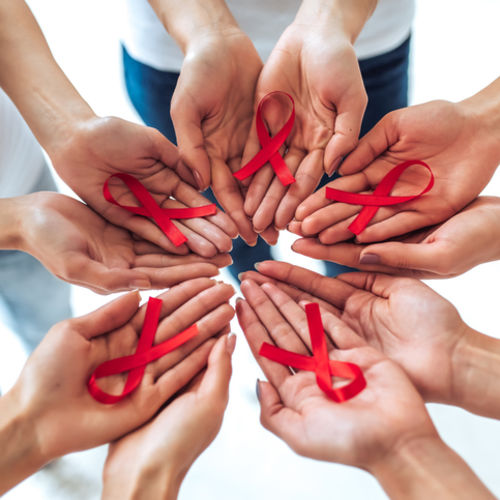
Within a month or two of HIV entering the body, 40 to 90% of people have pseudo-influenza symptoms, but sometimes HIV symptoms do not appear until several years, sometimes even a decade, after infection.

At the beginning of HIV infection, the most common symptoms are none, says Michael Horberg, MD, director of HIV/AIDS at Kaiser Permanente in Oakland, California. In the United States, five people with HIV do not know they have it. That is why it is so important to get tested, especially if you have unprotected sex with more than one partner or use intravenous drugs.
Here are some signs that you may be HIV-positive.
1 Fever
One of the first signs of epilepsy syndrome may be a slight fever, up to about 38.9°C. The fever, if it occurs, is often accompanied by usually mild symptoms, such as fatigue, swollen lymph nodes, and sore throat. At this point, the virus enters the bloodstream and begins to replicate in large numbers.
2 Fatigue
The inflammatory response generated by your besieged immune system can also cause a feeling of fatigue and lethargy.
3 Joint pain, swollen lymph nodes
ARS is often confused with influenza, mononucleosis or other viral infections, even syphilis or hepatitis, and not surprisingly, many of the symptoms are the same, including joint and muscle pain and swollen lymph nodes.
Lymph nodes are part of your body’s immune system and tend to become inflamed in case of infection.
4 Sore throat and headache
As with other symptoms, sore throats and headaches are often recognized as Aids only in context, says Dr. Horberg. If you have recently adopted high-risk behaviour, an HIV test is a good idea. Get tested for yourself and others – AIDS is most contagious early on.
Keep in mind that the body has not yet produced HIV antibodies, so an antibody test may not detect it. (It may take a few weeks to a few months for HIV antibodies to appear in a blood test.) Consider other test options, such as one that detects viral RNA, usually within nine days of infection.
5 Itching of the skin
Skin rashes can occur sooner or later in the course of HIV/AIDS. Skin rashes can also appear on the body’s trunk. If they are not easily explained or treated, you should consider getting tested for AIDS.

6 Nausea, vomiting and diarrhoea
According to Dr Malvestutto, between 30% and 60% of people experience short-term nausea, vomiting or diarrhoea at the onset of HIV.These symptoms may also occur following antiretroviral treatment and later in the course of infection, usually as a result of opportunistic infection.
Continuous diarrhoea that does not respond at all to usual treatment could be an indication, says Dr. Horberg. Symptoms may also be caused by an organism that is not usually seen in people with healthy immune systems, he adds.
7 Weight loss
When called « AIDS loss », weight loss is a sign of more advanced disease and could be partly due to severe diarrhea. If you’re already losing weight, it means that your immune system is usually quite weakened. It’s the patient who has lost a lot of weight, even though he continues to eat as much as possible. It’s a late presentation. However, it has become less common thanks to antiretroviral therapy.
A person is considered to have fatigue syndrome if he or she loses 10% or more of his or her body weight and has diarrhoea or weakness and fever for more than 30 days.
8 Dried juice
Dry cough is one of the many signs, and it presents as an insidious cough that may last for weeks and does not seem to resolve.
9 Pneumonia
Coughing and weight loss can also be a harbinger of a serious infection caused by a germ that would not bother you if your immune system was functioning properly.There are many different opportunistic infections and each of them can present differently.
10 Night sweats
About half of people experience night sweats early in HIV infection. These may be even more common later in the course of infection and are not related to exercise or room temperature. Similar to hot flushes in postmenopausal women, they are also difficult to rule out, as they soak the sheets.
11 Changing nails
Another sign of late HIV infection is nail change, such as:
- bruising (thickening and curvature of the nails),
- the folding of the fingernails
- or discoloration (black or brown lines extending vertically or horizontally), often due to a fungal infection, such as candida.
12 Yeast infections
Another common late-stage fungal infection is thrush. It is an infection of the mouth caused by Candida, a type of yeast. It is a very common fungus and the one that causes yeast infections in women , said Dr. Malvestutto. They tend to appear in the mouth (white spots) or esophagus, making it difficult to swallow.
13 Confusion or difficulty concentrating
Cognitive problems can be a sign of HIV-related dementia.This usually occurs late in the course of the disease.In addition to confusion and difficulty concentrating, AIDS-related dementia can also lead to memory problems and behavioural problems such as anger or irritability.
This may even include motor changes:
- clumsiness,
- lack of coordination,
- problems with tasks requiring fine motor skills such as handwriting.
14 Fever or genital herpes
Fever blisters (oral herpes) andgenital herpesAnd having herpes can also be a risk factor for getting HIV. Because genital herpes can cause ulcers that make it easier for AIDS to get into the body during sex. And people with HIV tend to have more severe herpes outbreaks more often because the virus weakens their immune system.
15 Tingling and weakness
Late HIV can also cause numbness and tingling in the hands and feet. This is called peripheral neuropathy, which also occurs in people with uncontrolled diabetes. This is when the nerves are actually damaged, Dr. Malvestutto explains. These symptoms can be treated with over-the-counter painkillers and anti-ulcer drugs such as Neurgabapentin.
16 Irregularity of menstruation
Advanced HIV infection appears to increase the risk of having menstrual irregularities, such as fewer and lighter periods. However, these changes are likely to be more related to weight loss and poor health in late-stage infected women than the infection itself. HIV infection has also been associated with early menopause (47 to 48 years for infected women versus 49 to 51 years for uninfected women).
AIDS is unfortunately one of the most common STDs, but still less so than AIDS.Chlamydia, I Hepatitis Bor theBlennorragia of the eyeAnd sometimes a sex cam session is more safeThink about it.