



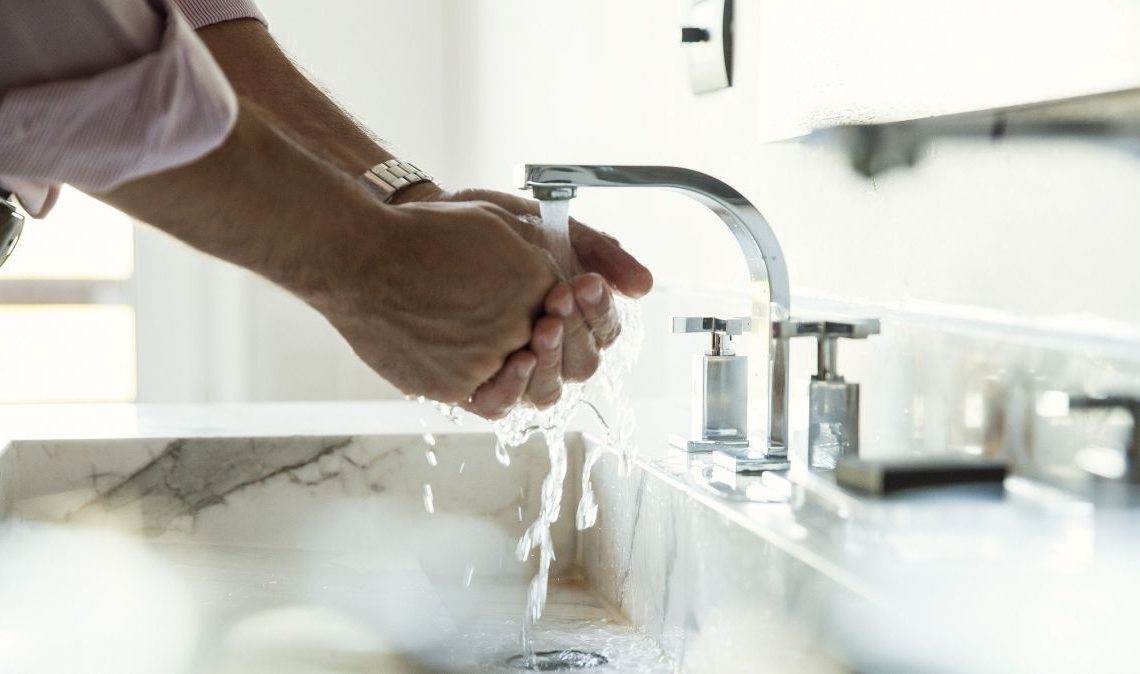
In this time of pandemic, hygiene is more important than ever, and the good thing about COVID-19 is that we’re washing our hands more.1 out of 3 French people do not wash their hands after going to the toilet.
If the flu and gastroenteritis have decreased thanks to better manual hygiene, it is still insufficient. Coronavirus scares us and makes us take action. This should also be the case when going to the saddle. Washing hands before and after approaching this intimate area should be mandatory. Yet, the French are on the sidelines when it comes to washing their faces.
This is at least what a new Ifop survey shows, highlighting the progress made in the Hexagon in terms of cleanliness since the 1950s.
Hygiene rules not always respected…
It seems that the French have a somewhat dubious reputation around the world when it comes to hygiene. We even have a special smell, some foreigners say. Is this stereotype true?!
A study by l’Ifop for Diogène-France carried out in February and published in October reveals that the overall hygiene of the French has improved significantly since the 1950s, but that some French people do not observe all the rules of hygiene… Surprisingly… Especially among men, elderly people and isolated people. A crucial point in these periods of Covid 19 and potential re-confinement.
Well, the case is not lost. In fact, 76% of the French wash every day. But 24% do not do it every day! If our skin does not like to be scratched and wet every day, it is however advisable to at least get clean and brush your teeth. If dermatologists and doctors advise against daily showering to protect our skin, a minimum of hygiene and cleanliness is still recommended. Especially for our intimate parts.Change your underwear every day., which is also something that some French people don’t do.
Especially when it comes to hands !
However, in general, not all French people pay much attention to hand hygiene during the day. 29% of French people admit that they do not wash their hands systematically after going to the toilet. 33% of French people do not wash their hands systematically before cooking, and almost 50% do not wash their hands before eating.

Worse still, only 3 out of 10 French people wash their hands before caring for a baby (38%), after taking public transport (37%) or after being in contact with an animal (30%).
Practices that vary according to gender
A new surprise (or not) emerges from this Ifop study. Regarding overall hygiene, women are cleaner than men. 81% wash thoroughly every day compared to 71% of men. For underwear, the disparity between the two genders is even greater. 94% of women change their underwear every day, only 73% of men do the same.
A difference which can also be seen in the application of the basic rules laid down by the public authorities on hygiene: barely 68% of men wash their hands systematically after going to the toilet, compared with 75% of women; 31% of men wash their hands after using public transport, compared with 42% of women.

The only exception between men and women is hair washing. 35% of men say they wash their hair every day, while 8% of women shampoo daily, which is not recommended. They wash their hair every other day or twice a week.
The results of the 1951 survey carried out by Elle magazine show that only one in two (51%) women washed daily at that time, due to a lack of access to basic sanitary amenities (hot water, access to a shower, a bath, a bathroom).
Is it a question of means?
The most striking aspect of this study is that it is found that bodily hygiene is closely linked to age and social isolation: if we take the example of showering, 36% of men over 65 take only one shower every day, compared with 46% for women.
It should also be borne in mind that 88% of main residences have access to a shower, so there is still a good percentage to fill.3 million French people still could not afford to maintain proper hygieneYou can also find points of solidarity where you can drop off products for personal hygiene in some places.