




In the theater of sensations that animate the human experience, touch, though the most fundamental, is often overlooked. We focus on sight, hearing, or smell, forgetting that our skin is our largest and most receptive sensory interface. Yet, the texture of objects can transform our perceptions, guide our emotions to amplify our pleasure.
If sensuality and play are above all about awakening, it is crucial to ask whether our perception of tactile pleasure is dictated by the quality, fineness, and history of the fabrics that caress us. It is in Asia, the ancestral cradle of silk, that we will seek the most subtle answers to this profound question.
The exploration of touch through noble textiles like silk, velvet, or cashmere reveals an entire dimension of the psychology and culture of sensations. This article will explain how the choice of a material can influence the quality of interaction.
The Asian Heritage: Silk, a Language of Discreet and Historical Sensuality
The history of silk is not that of a textile material; it is linked to a culture of refinement, mystery, and sensuality that endures in the Asian art of living.
From the Road to Rituals: The Erotic Charge of Fabric
Silk, whose secret was guarded by Chinese emperors for millennia and which became an object of desire along the famous Silk Road, is a powerful symbol of luxury and rarity. It is also a tool of seduction with unparalleled subtlety. Its use, particularly in traditional Japanese kimonos or Chinese qipaos, gives it a special erotic charge.
Its way of draping the body, revealing without ever fully exposing, captivates the imagination. Because it contrasts so strongly with the coarser, thicker fabrics of everyday life, its appearance in an intimate setting is always a promise of lightness, delicacy, and intimacy. It elevates simple touch to the level of a major sensory event. The craftsmanship behind the weaving thus becomes an integral part of the pleasure.
Finesse as a promise: the amplified game of sliding and brushing
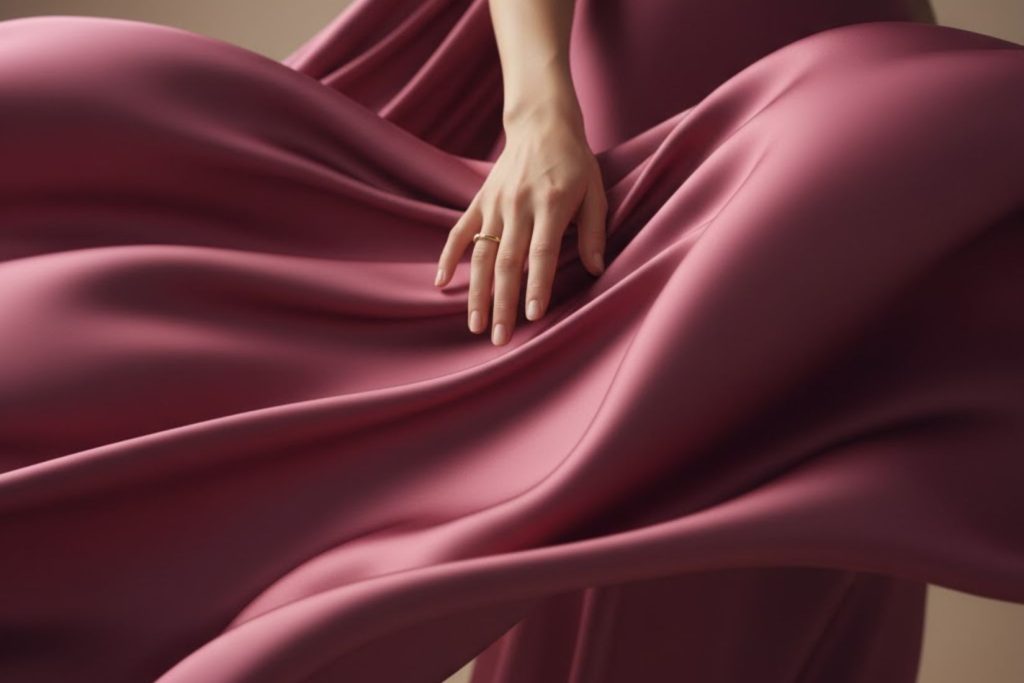
The texture of silk, produced by the continuous thread of the silkworm’s cocoon, has an unmatched fluidity and softness. Unlike cotton or linen, which can create slight friction, silk glides effortlessly over the skin. It imposes a slow, contemplative rhythm on playful interactions, demanding a delicacy that amplifies every touch.
A simple contact of silk fabric on the nape of the neck, the hollow of the knee, or the thigh transforms into a prolonged caress, as the textile acts as a sensory filter that captures and diffuses the warmth of human contact. Moreover, silk is an excellent thermal regulator. This unique property makes it the ideal material for games of contrast and temperature, adding an extra dimension to tactile stimulation.
The Hedonic Bias: How the Psychology of Textures Profoundly Influences Us?
The choice of materials in a playful or sensual context is never a matter of chance. It responds to psychological and neurobiological mechanisms that govern our perception of comfort and pleasure.
The cocoon effect: security, surrender, and regressive pleasure
Tactile exploration is not limited to luxurious textiles. Fluffy materials like cashmere and velvet play a decisive role, offering a different sensory experience. These rich, thick, and enveloping textures are often associated with childhood comfort, protection, and a form of regressive pleasure.
They create a true « cocoon effect, » fostering psychological security and, by extension, surrender. Using these fabrics, whether in the form of cushions or throws, unconsciously lowers the barriers of restraint, preparing the body and mind to better immerse in the experience of play and shared vulnerability.
The role of touch in sensory deprivation
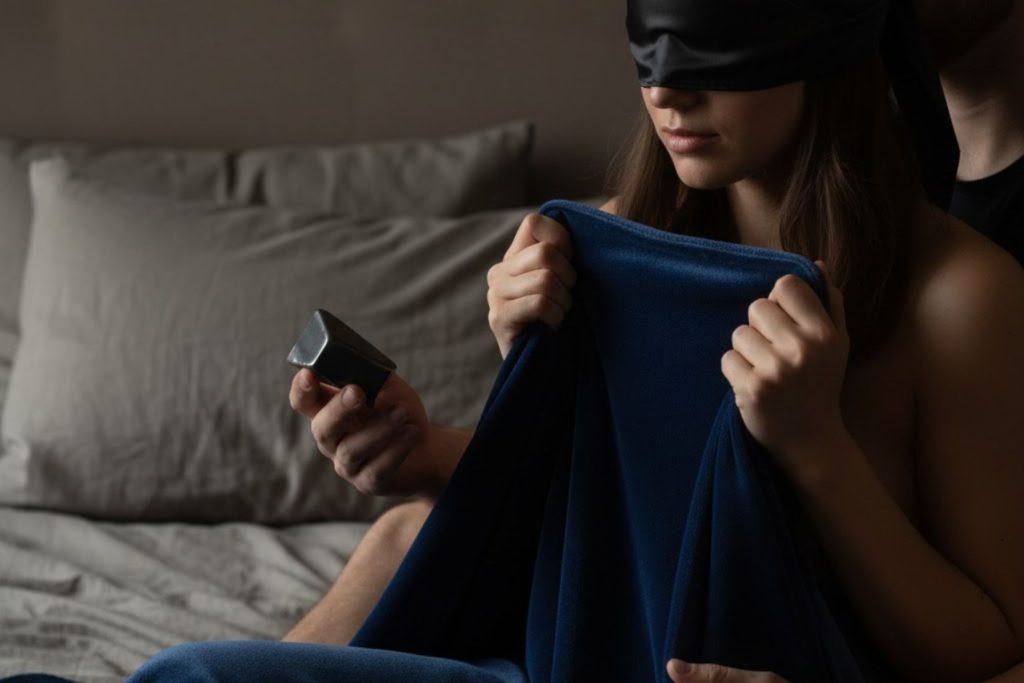
In the realm of sensory awakening, one of the most powerful techniques is to block one sense in order to heighten others. This is why silk is frequently used in games involving blindfolding. In this regard, a natural silk blindfold becomes much more than a simple eye cover; it is a true tactile guide. **Its soft, hypoallergenic contact**, free from friction, reassures and allows the person to focus on other sensations, such as:
- hearing;
- smell;
- touch.
It is clear that here, the quality of the fabric is essential, as a rough material would cause anxiety or discomfort, ruining the experience.
Sensorimotor Contrast: The Driving Force of Awakening
The greatest psychological strength of silk also lies in its ability to create contrast. For softness to be appreciated, the brain must know its opposite. The temporary introduction of a hard, cold, firm, or even textured material generates a tactile break.
When the body returns to contact with silk, satin, or velvet, this return to softness is perceived as a true hedonic shock. This alternation of textures is a powerful neurological stimulant that increases attention and, consequently, perceived pleasure.
Practical Ideas to Enrich the Tactile Experience
The power of materials lies in their ability to serve an intention and create a specific atmosphere. Consequently, the choice and staging of these textures must be thoughtful and deliberate.
Selecting the right texture for the right intention
It is fundamental to align the material used with the emotional goal of the interaction. For example, if the intention is lightness and playfulness, silk scarves in bright colors will be preferred for their airy movement and ease of being untied.
On the contrary, for a more intimate and profound atmosphere, one will opt for velvet or thick faux fur throws, which invite total envelopment and contemplative stillness. Another example is satin, often confused with silk, which, despite its similar sheen, offers a colder sensation to the touch, and can be used to mark an initial distance.
Creating a Tactile and Narrative Progression
A game should not be content with a single texture. Instead, it should tell a story using a progression of materials. One can start with rough or cold textures to awaken the skin. Then, one moves on to warmer, more enveloping materials to create a feeling of security.
Finally, one arrives at the contact of silk or bare skin, which becomes the climax, the tactile reward. This progression creates an anticipation that is a powerful amplifier of excitement and pleasure.
Beyond the Object: Integrating Matter
Despite the power of textiles, it is essential to remember that the most sensitive and complex material is the skin. Fabrics are merely bridges between bodies. This is why the game of caressing through a thin fabric is powerful, but does not replace contact. Accessories made of silk, satin, or velvet are not ends in themselves, but tools to elevate the tactile relationship and enrich the non-verbal dialogue between partners.
In conclusion, materials are not mere functional coverings; they are the first interface of our emotions and the catalysts of our interactions. Through the delicacy of silk, inherited from Asian traditions, and the sensory richness of velvet and cashmere, we discover that textures are powerful drivers of pleasure and intimacy.
In summary, the secret of sensory play lies in the art of paying attention to every skin sensation. We invite everyone not only to invest in the quality of fabrics, but above all to slow down, to listen to the material under their fingers, and to consciously harness this tactile world to enrich their playful experiences.
Experimentation is key—explore these sensations yourself, and let the simple, historic power of material reveal an unsuspected dimension of your sensuality. And you, which material transports you the most?