



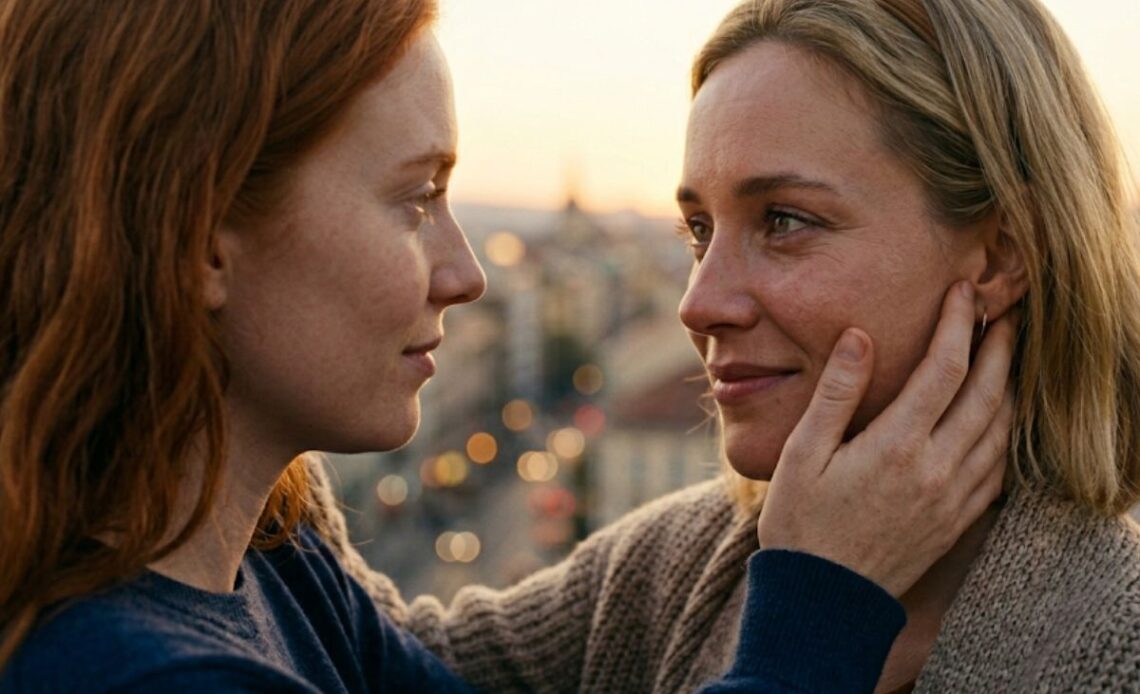
There’s a scent of quiet revolution in the air, a new wetness permeating our screens and glossy pages. For a long time, desire between women was a territory of stolen fantasies, observed through a keyhole by a foreign eye. Today, the curtain is rising on a far more magnetic truth. The media are no longer content to show; they invite us to feel the vibration of a caress, the eloquent silence of a glance and the organic poetry of two bodies in harmony. This new era is one of rediscovered fascination, where aesthetics blend with authenticity to celebrate a love that no longer asks permission to exist.
The “Sapphic Gaze”: when the camera becomes a caress
To penetrate the intimacy of a female couple today is to accept the shift from voyeurism to immersion. The concept of “Sapphic Gaz e” has brought about a major sensory shift, magnificently embodied in works such as Portrait de la jeune fille en feu and the organic narrative of the Gentleman Jack series. Where the male eye sought performance or objectification, this new lens seeks the thrill. We linger on the grain of a skin as it heats up, on the touch of a strand of hair, on breathing that suspends. The camera no longer films an act, it films a bond. It’s an aesthetic of feeling, where every shot is a promise, transforming the viewer into a privileged witness to a fluid, profound dance of seduction.
This visual revolution is rooted in a fierce determination to give women back their own desire. Instead of a rigid, stereotyped staging, contemporary works privilege an organic narrative. We discover a more accurate geography of bodies, where tenderness is as powerful as eroticism. It’s no longer an image we consume, but an emotion we share, a tactile exploration that stimulates the imagination through suggestion rather than the explicit. Desire is born of tension, expectation and the electric complicity that burns between two beings.
From shadow to sun: farewell to bitter secrets
Not so long ago, love between women was a confidence whispered in the shadows, a “little secret” protected from scandal like a fragile flame in the wind. We remember those popular icons, like Loana, who were forced to conceal their inclinations to avoid offending a still-cautious public opinion. This era of the “hidden” created an aesthetic of melancholy and shame. But in 2026, this veil of sadness has been torn. Female couples are now on full display, sunny and proud, transforming the old taboo into a celebration of everyday life.
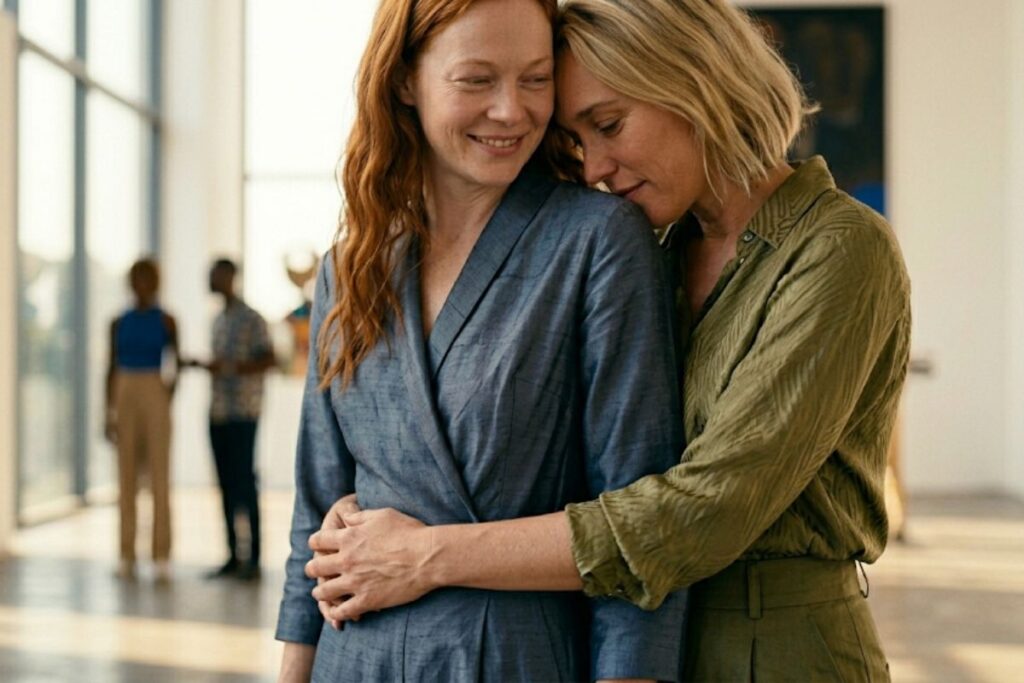
The transition from shadow to light radically changes the psychology of the couple. By freeing themselves from the weight of secrecy, these relationships gain in density and serenity. The media now reflect this radiant normalcy: we see these couples loving each other, building and blossoming, without their orientation being the sole driving force behind their story. It’s the end of systematic drama. This new visibility allows us to project an imaginary world in which happiness is no longer an exception, but an aesthetic and emotional given. Love is no longer an act of rebellion, it’s an art of living.
And to take the discovery further, nothing beats a webcam lesbian — the best way to take action.
The aesthetics of fascination: love as a work of art
Social networks and fashion have captured this fluidity to turn it into a new style icon. On Instagram or in the pages of Vogue, the female couple has become a source of absolute aesthetic fascination. There’s an intrinsic elegance in this symmetry of desires, a harmony of curves and spirits that captivates the modern eye. We no longer seek provocation, but grace. Photographers play with textures (silk against skin, end-of-day light highlighting an embrace) to create tableaux vivants where desire is elevated to the status of a masterpiece.
This staging of desire isn’t just beautiful; it’s magnetic because it’s authentic. Queer content creators and influencers have broken the codes of traditional marketing to impose their own truth. However, it’s essential to note that the issue of diversity (non-white, non-gender couples, non-normed bodies) remains an ongoing media battle. They script their intimacy with disconcerting fluidity, making every moment of their married life desirable and inspiring. It’s this ability to transform the everyday into a sensory epic that fascinates today’s public.

The geography of bodies: towards an organic truth
The final frontier of this representation is that of the skin. We have entered an era in which the smooth perfection of magazines gives way to the truth of bodies. The new representations celebrate the grain of the skin, the marks of time, the imperfections that make a caress unique. This organic approach to desire is far more stimulating for the imagination than any retouched image. It allows carnal identification, an immersion where you can almost feel the warmth of a breath or the softness of a hand that strays.
Ultimately, the media’s staging of this autonomy of desire confirms one truth: female pleasure is a vast and sovereign territory. The representation of female couples spearheads a global sexual liberation. By shifting from fantasy to carnal authenticity, the media are transforming this “perfume of quiet revolution” into a self-evident fact, vibrating with promise and absoluteness.