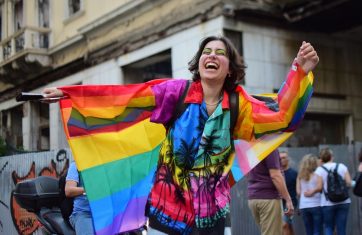




For decades, beauty canons have been dictated by a narrow and often unattainable aesthetic, erecting extreme thinness as a guarantee of happiness and success. Yet this quest for perfection has led to widespread body dissatisfaction, fuelled by excessively retouched images. This is precisely where the body positive movement comes in. Born of a desire to break out of these shackles, this movement does more than simply celebrate curves; it proposes a veritable cultural revolution.
By advocating acceptance of all bodies, whatever their shapes, scars or singularities, it deconstructs prejudice to rebuild solid self-esteem. The question is: how is this movement succeeding in transforming our mentalities and our industries in the long term? To answer this question, we will explore the three major axes of this revolution: visual liberation, the intimate paradigm shift, and the impact on industries.
The end of the “ideal body”: visual liberation
The Body Positive movement’s first major lever for change is our retina. By saturating public space with new images, the movement breaks the monopoly of glossy perfection.
Diversity as the new norm
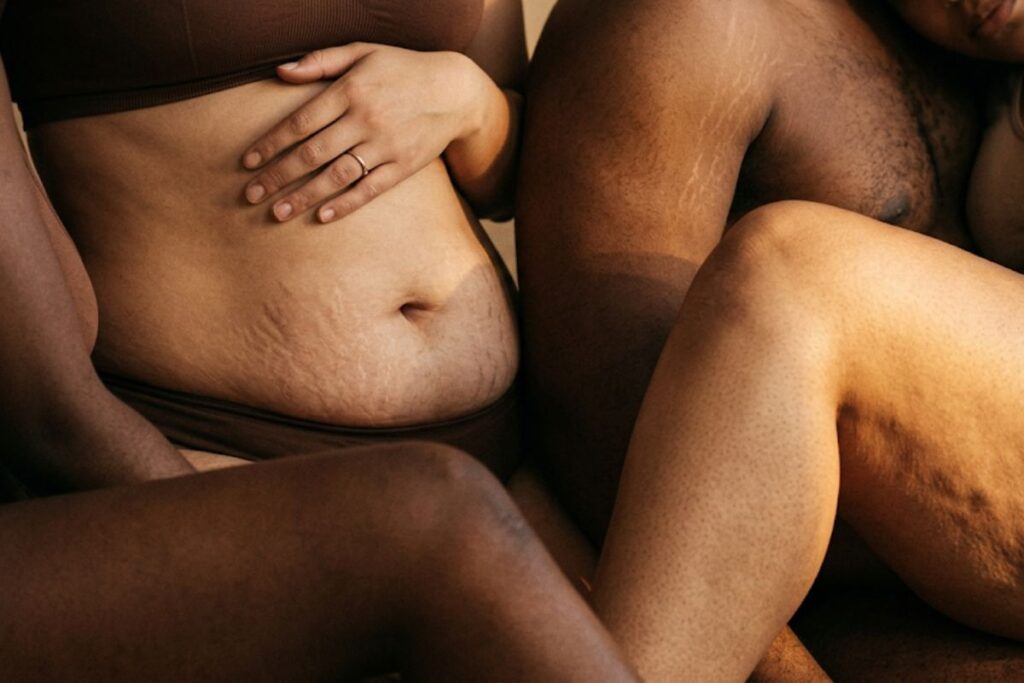
The human eye has long been conditioned to consider as “beautiful” only an extremely narrow spectrum of physical reality. The body positive changes the game by showing what was once hidden or retouched: stretch marks become “tiger stripes”, cellulite is normalized and stomach folds are no longer flaws, but natural features. This inclusive representation acts like a therapeutic mirror: by seeing bodies that resemble us, we stop perceiving our own singularities as anomalies to be corrected.
The influence of social networks
While fashion magazines have long served as the “guardians of the temple” of beauty, social networks have democratized the dissemination of images. Thanks to hashtags like #BodyPositivity or #CelebrateMySize, thousands of anonymous people have regained power over their own image. This horizontality of information bypasses traditional marketing filters. From now on, the influencer no longer simply sells an unattainable dream, but shares a reality that creates a sense of belonging and global solidarity.
Psychological impact
The omnipresence of visual diversity mechanically reduces what psychologists call “upward social comparison” (comparing oneself to someone deemed superior). By diversifying our newsfeeds, we train our brains for cognitive flexibility: beauty is no longer a single destination, but a landscape with multiple paths. This change of perspective reduces our constant self-criticism and calms our relationship with the mirror. This transforms our perception of the body from a “project to be improved” to a ” home to be lived in “.
Deconstruct to better reconstruct: a paradigm shift
Beyond image, body positivity attacks the very foundations of our intimate relationship with the body. It’s not just a question of changing what we see, but of transforming the way we think about our physical existence.
Rejection of “diet culture” and restriction
Society has promoted the idea that the body is a malleable material to be tamed through deprivation. The BoPo movement denounces this diet culture as often toxic and ineffective in the long term. Instead, it encouragesintuitive eating: relearning to listen to hunger and satiety signals without guilt. This shift from punitive discipline to a form of dietary autonomy frees up a colossal mental load, previously wasted on calorie counting.
Body neutrality: detach yourself from appearance
A major evolution in the movement is the emergence of “Body Neutrality“. While the injunction to love oneself at all costs can sometimes seem exhausting or unrealistic, neutrality offers a soothing alternative: the body is first and foremost an instrument, not an ornament. The idea is to celebrate what the body does (walking, breathing, creating, hugging loved ones) rather than what it looks like. This de-centering allows us to detach our self-esteem from the reflection in the mirror and link it to our abilities and life experiences.
And to take the discovery further, nothing beats a webcam women sex — the best way to take action.
Systemic education and empowerment
Changing mindsets also means understanding that weight is not simply a matter of “willpower”. The movement draws on sociological and biological data to remind us that body shape depends on multiple factors: genetics, metabolism, mental health, socio-economic level and access to healthcare. By shifting responsibility from the individual to a more global vision, body positivity helps to remove the blame. We no longer see ourselves as a personal “failure”, but as a human being evolving within a complex system.
Concrete impact on society and industry
Body positivity is not confined to the private or psychological sphere; it acts as an engine for economic and legislative transformation. By changing consumer expectations, it forces institutions to adapt.
A revolution in the fashion and cosmetics industries
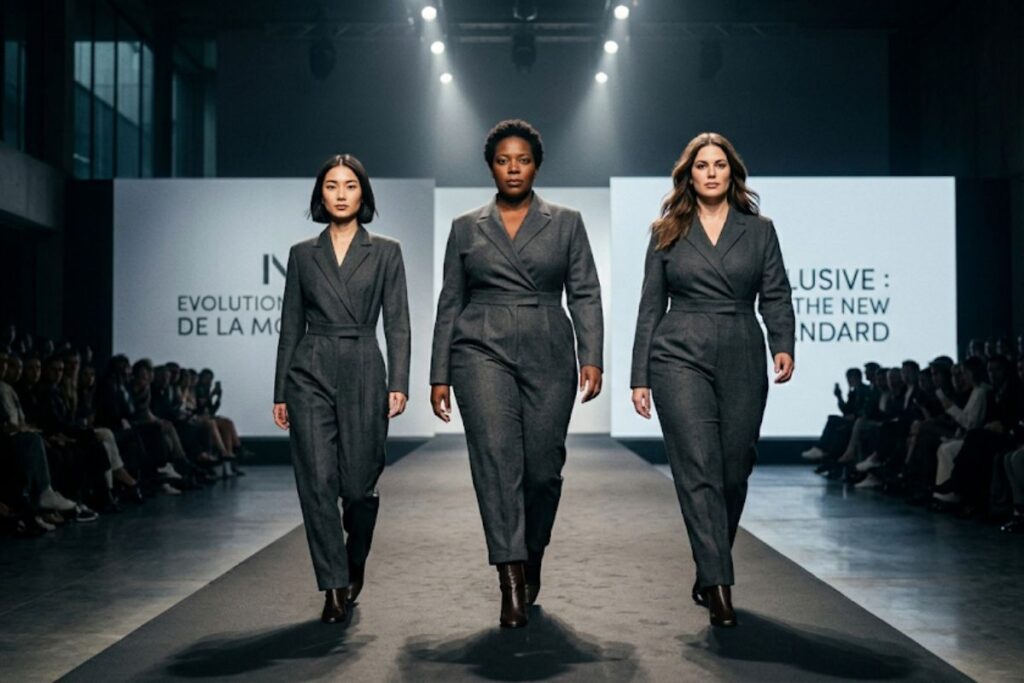
Under pressure from activists and new consumer standards, brands have had to rethink their strategies. We are witnessing the rise of“inclusive sizing“: offering identical collections from size 34 to 54 is no longer an exception, but a commercial requirement. At the same time, the big names in cosmetics and fashion have banned excessive digital retouching. This authenticity is no longer just ethical, it has become a major selling point: consumers now identify with models who proudly display their imperfections.
Towards fairer healthcare: combating medical grossophobia
One of the movement’s most crucial impacts has been in the medical field. Body positivity has highlighted systemic grossophobia, where a patient’s weight sometimes overshadows the diagnosis of real pathologies. Today, a dialogue is underway to train healthcare professionals in a more respectful, less stigmatizing approach. The aim is to treat the body as it is, without making respect or quality of care conditional on prior weight loss. This ensures better access to healthcare for all.
Legislative developments and image protection
Last but not least, this change in mentality is reflected in political action. In several countries, laws now govern the use of models whose body mass index (BMI) is deemed dangerous, in order to stop promoting anorexia. Similarly, the obligation to mention“retouched photograph” on advertisements is designed to protect the mental health of young people. These measures mark the transition from a militant movement to a societal norm protected by law, endorsing the idea that human dignity does not depend on a waistline.
A critical nuance: commodification and intersectionality
It’s crucial to note that this “revolution” is not without its critics. Some activists deplore the commercial exploitation (“body washing”) of the movement by brands, where inclusion remains superficial. Moreover, it is often pointed out that the Body Positive movement historically has its roots in fat acceptance activism led by racialized women, emphasizing that inclusion must be intersectional to be truly effective.
Ultimately, the body positive movement has achieved the feat of transforming a militant demand into a genuine societal change. By breaking down the diktats of perfection, it has liberated speech and bodies, forcing the fashion and health industries to be more inclusive. While there are still challenges to be met, not least the persistence of grossophobia, the dialogue is now firmly established. This revolution teaches us that beauty is not to be found in conformity, but in authenticity.