



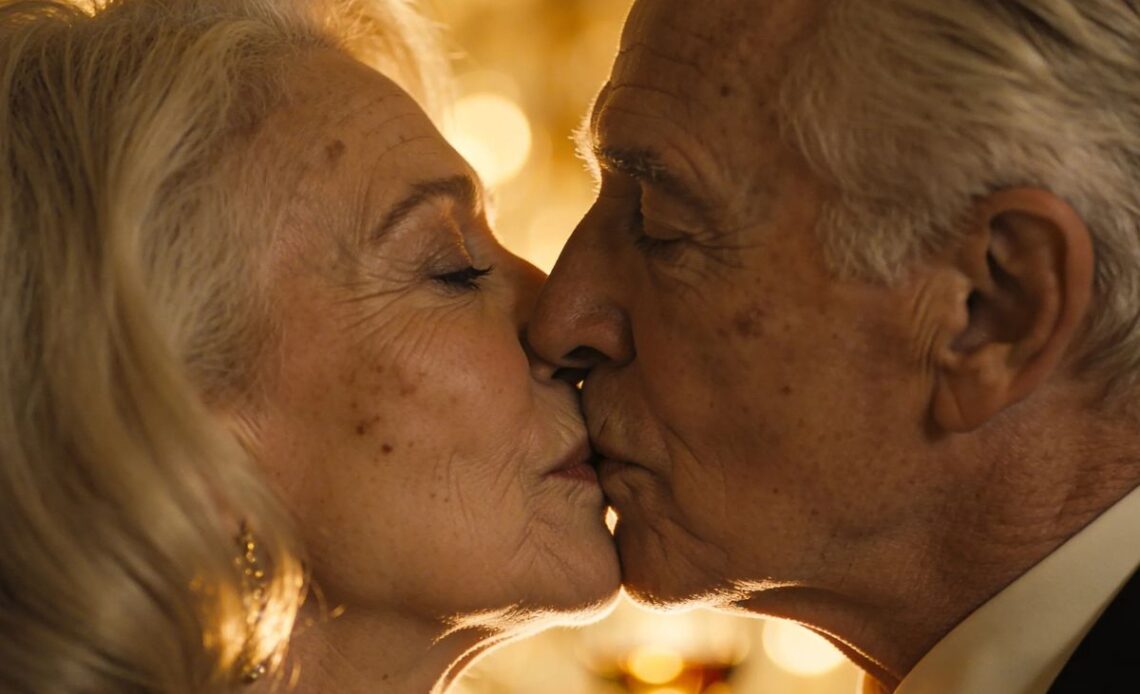
Let’s stop believing the great collective lie: libido is not a software application with an expiry date. Contrary to popular belief, which relegates eroticism to the smooth bodies of youth, the inner flame is not extinguished by the first white hair.
Society may sell youth as the only fertile ground for desire, but the biological and psychological reality is far more complex. In fact, getting older means seeing your sensuality refined like a vintage wine or a playlist that you fine-tune over time. We may lose in haste what we gain in depth and authenticity.
In this article, we explore how desire transforms over the years, away from the imperatives of performance, to make way for a new intimate plenitude.
Deconstructing the myth of the expiration date
It’s time to shatter a particularly tenacious image: that of the senior couple whose sensory horizons are limited to gardening, playing bridge or looking after the grandchildren. Not only is this vision reductive and outdated, it obscures a vibrant reality. Today’s “seniors” are actors in their own lives, and their intimacy is not put on the back burner just because the calendar is moving forward. As the body ages, it doesn’t become a “dead zone”; it simply changes frequency. Desire doesn’t evaporate with wrinkles; it transforms, gaining in thickness and complicity.
The influence of culture
Why have we taken on board the idea that “old = asexual”? Our culture, obsessed with performance and youth, has made the aging body a taboo subject in the field of seduction. Systematically associating eroticism with smooth skin and hormonal vigor renders older people invisible in their carnal dimension. To free ourselves from this, we need to shift our perspective: sexuality is not a question of “youthism”, but a form of communication that can last a lifetime.
Desire as a life drive
Desire is above all a life drive, a fundamental energy. As long as there is life, there is desire. We need to see desire as a “psychological muscle” rather than a simple matter of hormones on fire. While biology may be changing, the brain, which remains the primary sexual organ, retains its capacity for wonder and connection. Craving is a flame that can be modulated and reinvented through tenderness and creativity.

The metamorphosis of desire
From “Fast Sex” to “Slow Sex
Desire doesn’t fade with the years, it changes pace. If at 20, sexuality often resembles an emergency, a discharge of raw energy where finality takes precedence, maturity ushers in the era of exploration. We leave the territory of “Fast Sex” for that of “Slow Sex”. At 50 or 60, time becomes an ally rather than an enemy. We learn to savor foreplay, to stretch out the moments and to value the road travelled together rather than the destination alone. It’s a transition from performance to presence.
Emotional intensity
One of the greatest secrets of maturity is that getting to know each other better multiplies sensations. Where the novelty of beginnings brought an ephemeral thrill, longstanding complicity offers a much deeper resonance. Knowing what makes the other person tick, understanding their silences and breaths, allows them to reach an emotional intensity that the ardor of youth often ignores. Desire then becomes a complex language in which body and mind become one.
Letting go
With age comes a crucial liberation: the end of the quest for validation. We are no longer in the business of demonstrating our power or the anxiety to please at all costs. We no longer seek to reassure ourselves of our own power of seduction through the eyes of others. This detachment allows us to truly let go. Freed from the injunction to perform, partners can finally immerse themselves in pure, authentic, shared pleasure. This is the moment when intimacy becomes a space of total freedom, without judgment, where we simply allow ourselves to be.

So what if the body changes?
Small technical adjustments
Let’s face it: with time, the machine can have a few misfires. Between testosterone dips that require a little more patience and menopause that invites us to rethink our comfort levels, the body imposes its own new tempo. Let’s face it, these changes can be frustrating, but they’re not definitive breakdowns. They’re simply a signal that the instruction manual needs a light, self-deprecating update.
A change of rules
Just because the rules change doesn’t mean the game stops. On the contrary, it’s an opportunity to broaden your game. The use of lubricants, the discovery of accessories or the use of medical aids are not confessions of weakness, but tools for freedom. The solution replaces the problem: we take more time, we favour gentleness and we rediscover that pleasure does not depend on perfect mechanical functioning, but on renewed creativity.
Accepting the body as an ally
Learning to love this “new” body means respecting an ally that has stood the test of time. Its scars and marks are chapters in a shared history. When we stop chasing the reflection of our twenties, we open up to a more textured, more real beauty. Intimacy then becomes the place where we shed our masks, loving each other for what we’ve become, not for what we were.
Farewell to complexes
There’s a fascinating paradox that comes with age: we’re often much sexier when we finally stop trying to look like models. The complexes that plagued us in our twenties give way to a more serene reality. By accepting our curves, wrinkles and imperfections, we radiate authenticity. True seduction no longer lies in standardized plasticity, but in the ease with which we inhabit our own skin. This transition from appearance to embodiment is the secret of lasting attraction.
Communication
In a long-term relationship, we often mistakenly think that the other person already knows everything about us. Yet desire thrives on mystery and evolution. Reinventing complicity requires the power to say “I’d like that”. Expressing a need or a fantasy is not just a technical request, it’s a sign of trust. Sharing your desires with clarity invites the other person into a new intimacy, and breaks the routine through the simple power of words.
Ultimately, desire doesn’t disappear with age: it changes and, sometimes, becomes more intense. By freeing themselves from the injunctions of performance in favor of complicity and listening, couples transform intimacy into a deeper experience. This sensual maturity, nurtured by communication, offers a new plenitude.