



By consensus, many people agree on a generalized vision of the Latin body, most often associated with seduction and excitement. We need to go beyond this vision to analyze how this imaginary has been fabricated and, more recently, deconstructed. In this article, we explore the various factors – historical, climatic and cultural – that explain the attraction to Latin bodies, while examining the new wave of plural identities that is reshaping this perception.
Hollywood: Manufacture of the myth and the “Latin Lover
The attraction to Latin bodies stems from an imaginary that has gradually given a sensual character to people from the Latin American continent. If Latin bodies are so exciting, it’s largely thanks to Hollywood. In fact, “Latin exoticism” was seen as having potential around the 1930s. This led to the emergence of stars such as Rudolph Valentino, the emblematic figure of the “Latin lover” (well-defined facial features, dark, dark hair).
Years later, women such as Raquel Welch, Margarita Cansino (later Rita Hayworth) and Carmen Miranda embodied the image of the “Latin bomba”. During their era, the Latin woman was portrayed as both attractive and raw. Today, it’s the likes of Shakira and Jennifer Lopez who have taken up the mantle. The beauty standards they inspire are well-shaped, generously curvaceous bodies (the booty). Previously despised by Western culture, this physical characteristic is now the envy of much of the world’s population.

When climate intervenes
As trite as it may sound, climate has played a major role in the fascination with Latin bodies. Indeed, whether in southern Europe (Portugal, Spain) or on the American continent (Guatemala, Brazil, etc.), the sun is a climatic constant in Latin zones. This has had two main repercussions:
- The appetite for a more exposed body: in places where the sun is constantly out, people are accustomed to wearing light, short clothes. This encourages people to take better care of their bodies, so as to stand out when out walking.
- Heat-related symbols: sometimes unconsciously, we associate human heat with climatic heat. As a result, Latin American bodies are contrasted with the cold bodies of European and North American countries, in the most globalist sense of the term.
The aesthetics and sense of rhythm associated with the Latin body
A specific type of bodily expression is directly associated with Latin people, especially women. It’s not just a question of the body, but also of its movement in space.
The curvature revolution
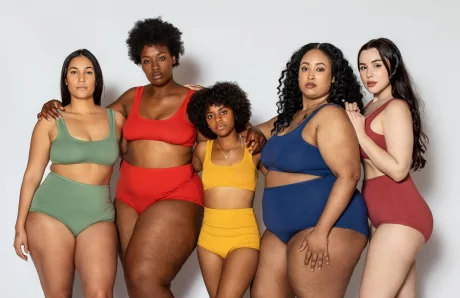
For many decades, Western beauty canons have emphasized athletic slenderness, obscuring any other vision of what a beautiful body represents. But for several years now, curves have had the upper hand. In short, the hourglass figure is celebrated the world over.
Buttocks and hips are seen positively by women and men alike: they symbolize dynamism and, paradoxically, finesse. The Latin body has thus become a model to be imitated, which has unexpectedly led to a surge in surgical procedures such as the Brazilian Butt Lift (BBL), transforming a characteristic linked to ethnic origin into a fad, not without ethical and health risks.
Dance: a benchmark for the Latin body
Music, and its faithful ally, dance, are other aspects that encourage a love of Latin bodies. In particular, the pelvis is put to great use in Latin dances such as tango, bachata and salsa. In the eyes of outside cultures, this symbolizes the body’s assertive sensuality and independence. Moreover, as with Africans, rhythm is originally associated with the Latin body. This leads people from other cultures to imagine a fusion of body and spirit in Latin music.

Relationship to physical distance
If many people are fascinated by Latin bodies, it’s also because of their relationship to physical distance. Indeed, in Latin culture, bodies are often closer to each other. Touch is omnipresent, and embraces are constant and emotional. This fosters a perception of openness and intimacy that can be interpreted as greater emotional or sexual accessibility.
The role of digital technology in the new perception of Latin bodies
The Internet has given the Latin body greater impact. Paradoxically, it has also encouraged the expression of voices that propose a different vision of the “Latin” person, far removed from the myths created by Hollywood.
Increased exposure on social networks
The new tools for promoting Latino style include TikTok and Instagram. In fact, the beauty standards of this community have played a major role in coining names such as “Baddie” or “Clean girl”. A kind of international beauty standard is emerging. For many people, however, this means acculturation.
Also, stars with millions of subscribers like Maluma or Georgina Rodríguez have become more than just public figures. They are brands in their own right. This enables them to promote, consciously or unconsciously, their cultural habits and the plasticity they wish to embody as Latin celebrities.
Indigenism and Afro-Latinidad as another tool for deconstruction
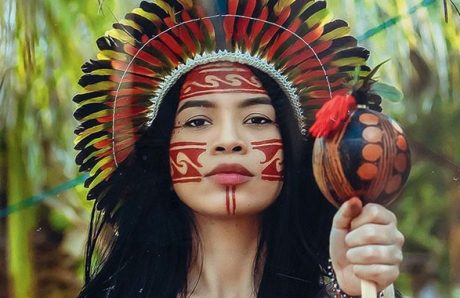
In addition to the above-mentioned efforts to deconstruct Latin body stereotypes, there is also a profound questioning of the clear Mestizo model. In fact, a new wave of people is advocating the enhancement of the essentially African features of a large part of the Latin-American community. It’s no longer a question of seeing Latin solely as a descendant of Indo-European, but as part of a larger whole.
Different skin tones and hair textures will thus find a more legitimate place in this new narrative. Finally, another wave of Latino influencers is challenging the stereotype of the hot-blooded Latino with a body that evokes sensuality. Instead, they define themselves by a complex identity, with political and intellectual underpinnings.
Theattraction to Latin bodies stems from a number of factors, from the clichés promoted by Hollywood to the role of climate and the supposed dancing predispositions of the people concerned. Today, a broader, less biased vision is being put forward by influencers and opinion leaders.
Even if past myths still persist, we need to open up to a new orientation in terms of perception, to humanize Latin bodies and not reduce them to mere fantasies. It is in this recognition of plural identities, notably Afro-Latinidad and Indigenism, that we find the true decolonized narrative of the Latin body.