




Long relegated to the level of a simple hygienic concern, intimate health is now asserting itself as the indispensable foundation of a fulfilling sex life. Much more than the absence of pathology, it is based on a delicate physiological balance– that of the microbiota and pH– but also on an essential psychological dimension: confidence in one’s own body. How can we leave room for pleasure when discomfort or apprehension intrude on intimacy? Here, we explore the close links between the well-being of our “secret garden” and the quality of our love life, from the impact of hormonal fluctuations to daily preventive reflexes.
PHYSIOLOGICAL BALANCE: THE BASIS OF SEXUAL COMFORT
The crucial role of microbiota and pH
The vagina is not a sterile environment; it’s a complex, dynamic ecosystem. Its balance depends on a precise interaction between microorganisms and local acidity.
- The microbiota: mainly composed of Lactobacilli. These “good” bacteria act as a shield, producinglactic acid and hydrogen peroxide to prevent the proliferation of pathogenic germs.
- The pH index: A healthy vagina is naturally acidic, with a pH generally between 3.8 and 4.5. This acidity is the first line of defense against infections (vaginosis, mycosis).
Why is it important for sex? An imbalance can make the mucous membrane hypersensitive, inflammatory or painful at the slightest touch. If the pH is disturbed (by excessive washing, unsuitable protection or antibiotics), the protective barrier collapses, transforming a moment of intimacy into a source of irritation.
The essential question of lubrication
Lubrication is not just a sign of arousal; it’s an essential protective mechanism.
- The mechanism: arousal increases blood flow to the genitalia, causing fluid to ” transpire” through the vaginal walls.
- Hormonal influence: estrogen plays the role of conductor here. They maintain the thickness, elasticity and hydration of the mucosa. This is why menopause, post-partum or certain contraceptives can lead to vaginal dryness.
- The protective role: Without adequate lubrication, friction creates micro-lesions. These small tears are not only painful, they also provide an entry point for bacteria.

THE VICIOUS CIRCLE: PHYSICAL DISCOMFORT AND PSYCHOLOGICAL STRESS
Physiological balance and psychological well-being are intimately linked. When one fails, the other follows, creating a loop that’s hard to break: pain, apprehension, stress, inhibition of lubrication and increased pain.
- The defense response: If the body has “learned” that contact is painful, it will reflexively tense up ( muscular protection).
- The impact of stress: Cortisol (stress hormone) is the enemy of arousal. A mind worried about potential pain blocks pleasure signals, making the area even drier.
Confidence, self-image and desirability
Intimacy is first and foremost rooted in our perception of our own body. When the physiological balance is upset, the whole edifice of self-confidence can falter.
- Feel “healthy” to feel desirable: Desirability is closely linked to feelings of inner security. Comfort allows us to forget ourselves in pleasure.
- The weight of injunctions: Society often imposes a sanitized image of the intimate zone. Feeling far from this “standard” can provoke a form of body shame.
How intimate preoccupations create a mental block
The brain is the most powerful sexual organ. If it’s parasitized by intimate health concerns, it can’t switch into ” pleasure mode “.
- Parasiting the present moment: The mind is consumed by questions: “Do I smell bad?”, “Will it hurt?”.
- Performance anxiety: The fear of having to stop the act creates stress that inhibits arousal. It’s a self-fulfilling prophecy, as stress is the primary factor in vaginal dryness, confirming the initial fear.
- Preventive avoidance: To avoid having to face these doubts, we end up avoiding moments of intimacy, which can be misinterpreted by our partner as a lack of desire.
COMMUNICATION AND COMPLICITY: BREAKING THE SILENCE
To break this vicious circle, communication shouldn’t be seen as a “love killer”, but as a tool for complicity.
- Move from “problem” to “feeling”: Instead of talking in medical or technical terms, share your immediate feelings. Examples: “I’m feeling a bit sensitive today, so let’s take it easy” or “I need more time to get comfortable”.
- Make the partner an ally: Involving the other person helps defuse the fear of judgment. If the partner understands that discomfort is a physiological reaction and not a lack of interest, the pressure is off.
- The importance of timing: Discussing these subjects “cold”, outside the bedroom, facilitates a calm discussion of solutions (choice of lubricant, change of rhythm, medical consultation).
PREVENTION AND GOOD DAILY PRACTICE
Good hygiene practices: protecting your microbiota
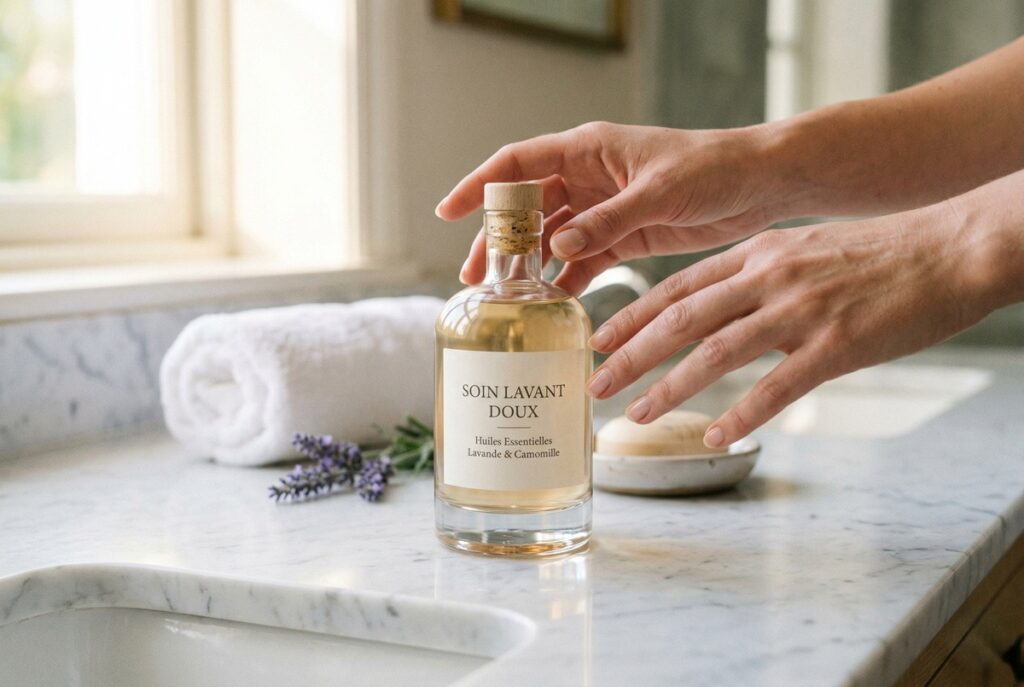
The first thing to do to protect your microbiota is not to try to sanitize it. The vagina is a self-cleaning organ; hygiene should be limited to the external area (the vulva).
- External cleansing only: Use clear water or a specific cleanser with a physiological pH (around 5 or 5.5). Avoid aggressive soaps, conventional shower gels or perfumed products.
- Say goodbye to douching: introducing water or soap into the vagina instantly destroys the protective flora and increases the risk of infection.
- Choice of materials: cotton undergarments are the best choice. Synthetic materials trap moisture and heat, creating a breeding ground for fungus.
- Meticulous drying: After washing, dab gently with a clean towel.Stagnant moisture is the enemy of balance.
Responsible sexuality: Body and Mind
Being “responsible” in love means protecting your physical health while respecting your emotional well-being and that of your partner.
- Regular screening: This is the basic step before stopping using condoms. ManySTIs (Sexually Transmitted Infections) are asymptomatic.
- Use appropriate lubricants: If you use latex condoms, use only water-based lubricants. Fatty substances make latex porous and brittle.
- Enthusiastic consent: Consensual but “suffered” intercourse creates muscular tension and a lack of lubrication, leading to physical irritation. Listening to your own desire is a measure of intimate health in its own right.
Post-course reflexes
Once intercourse is over, there are a few things you can do to prevent the most common problems, such as urinary tract infections.
- The “bathroom break” reflex: Urinating immediately after intercourse helpsexpel any bacteria that may have made their way up the urethra. This is the most effective way to prevent post-coital cystitis.
- Light cleansing: A quick rinse with lukewarm water is all that’s needed to remove any residue that could become irritating as it dries.
- Hydration: Drinking a large glass of water helps to drain the urinary system and rehydrate the mucous membranes.
- Aftercare: Taking the time to chat or cuddle allows the body to gently emerge from the state of physical alertness and stabilize the heart rate.
More than just a question of hygiene, intimate health is the foundation of a fulfilling sexuality. From microbiota balance to self-confidence, every physiological aspect has a direct influence on desire. By combining daily prevention and communication, it’s possible to break the circle of discomfort and invest fully in pleasure.