


The black dandy is an emblematic figure who transcends fashion to embody a great affirmation of identity. While classic dandyism is defined by the cult of appearance and aristocratic detachment, the black dandy fuses this refinement with a complex history, transforming elegance into a political act. Emerging in black communities as a direct response to stereotypes and social assignment, this movement has elevated finery to the level of a requirement for dignity and respectability.
From the intellectual figures of the early 20th century to the impeccably dressed jazz musicians and the flamboyant brilliance of the Congo sappers, clothing became a language. The challenge is to determine the exact scope of this elegance: is it a simple aesthetic phenomenon, or a strategy of cultural sovereignty aimed at redefining black identity and masculinity in the face of the dominant gaze? In this article, we explore this philosophy of elegance through its roots, codes and contemporary heritage.
The elegance of the black dandy is never brutally imposed. It allows itself to be discovered. It catches the eye before it captures attention. A perfectly mastered crease, an assumed color, a calm posture: all combine to create a presence that unsettles without ever forcing the issue. Desire is born here in restraint, in this absolute mastery that lets us guess the body without ever giving it away.
Historical roots and key phenomena
Black dandyism is a complex construction of identity, with its roots in political and social resistance. From the outset, elegance was not a frivolity, but a strategic weapon for asserting dignity and humanity in the face of oppression.
Post-slavery dandyism
In the United States, after the abolition of slavery, the adoption of formal, meticulous dress by black men became a subversive act. In the public space, the body dressed in this way became a silent manifesto. Every step, every sustained glance, every measured gesture affirmed a full and complete existence. Elegance shaped the silhouette with rigor, transforming the black body into a presence impossible to ignore, dignified, confident, profoundly human. This outfit was not a disguise, but a refined suit of armor, charged with tension and pride. What’s more, the maniacal care taken with the garment projected an image of respectability, a shield against systemic inferiorization.
The SAPE phenomenon (Société des Ambianceurs et des Personnes élégantes)
The SAPE phenomenon is the most famous and theatrical expression of black dandyism in Central Africa, mainly in Congo-Brazzaville and the Democratic Republic of Congo. Born in colonial times, when servants returning from Europe proudly sported Western clothing, SAPE transformed these symbols of alienation into instruments of local glory. Indeed, for the sapeur, the outfit is a manifesto of creativity, ingenuity and a joie de vivre that flamboyantly defies precariousness.
Influence on jazz and art
During the Harlem Renaissance of the 1920s and 1930s, elegance became inseparable from creative genius. Jazz figures such as Duke Ellington, Count Basie and later Miles Davis elevated dandyism to the level of performance art. Their impeccable style– often double-breasted suits, wide lapels and neat hairstyles – complemented and magnified their sophisticated music. In fact, sartorial elegance served as a bridge between African-American culture and global modernity. It was proof that artistic innovation and social refinement came intrinsically from the black community. The dandy’s aesthetic was then the mark of a free man, independent and master of his own cultural expression.
Aesthetic codes, attitude and philosophy
The black dandy is more than just an accumulation of clothes; it’s a rigorous aesthetic discipline. While British dandies such as Beau Brummell advocated sobriety and the elimination of color, black dandies often boldly subvert these rules.
The art of costume and color
Costumes act like a second skin. Fabric glides over the body, catches the light, emphasizes the shoulder and lengthens the line of the back. Colors vibrate, not to seduce head-on, but to assert a presence. Velvet absorbs glances, silk holds them for a moment longer. Nothing is left to chance: the garment reveals as much as it conceals, creating a subtle balance between restraint and attraction.
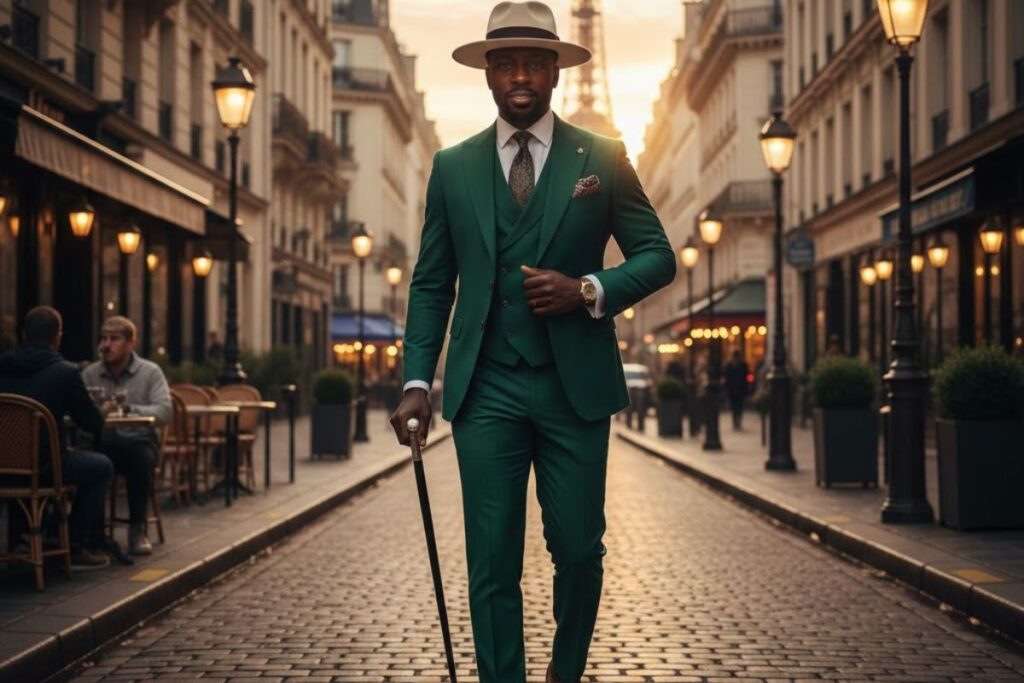
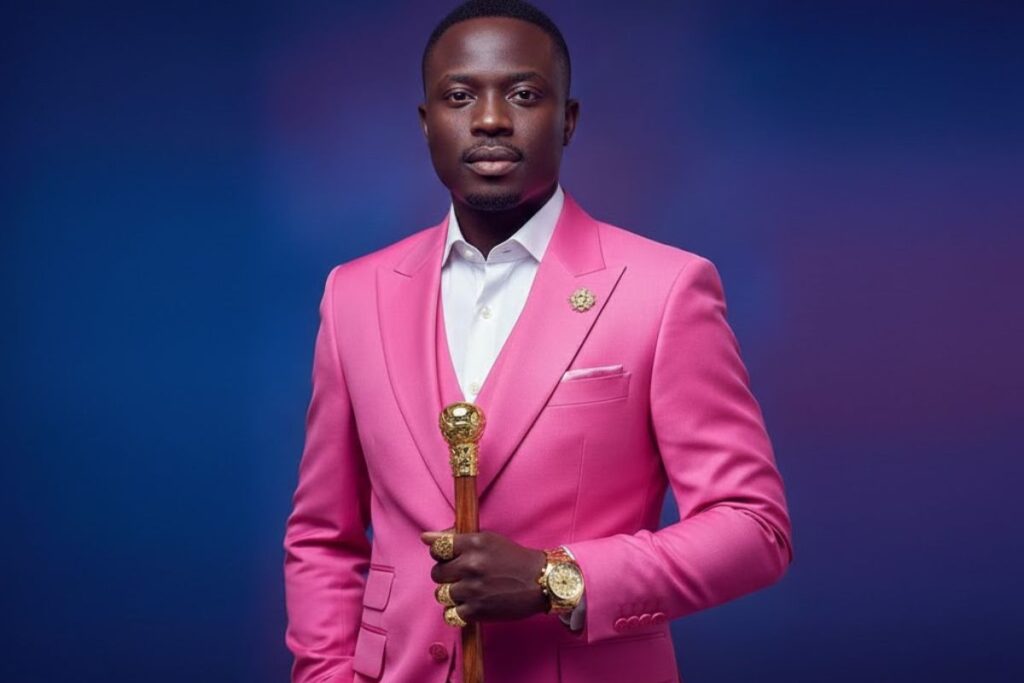
This aspect is based on a demand for perfection: the cut, often made-to-measure, must be irreproachable to underline the dignity of the body. While classic dandyism advocated Victorian discretion, the black dandy embraces brilliance. The masterful use of color (emerald greens, ruby reds, electric blues) and exuberant patterns (intricate checks, bold stripes, velvety textures) becomes an identity marker. It’s a joyful, sovereign reappropriation of visual space, contrasting with the forced invisibility that history has often tried to impose.
Accessories as signature
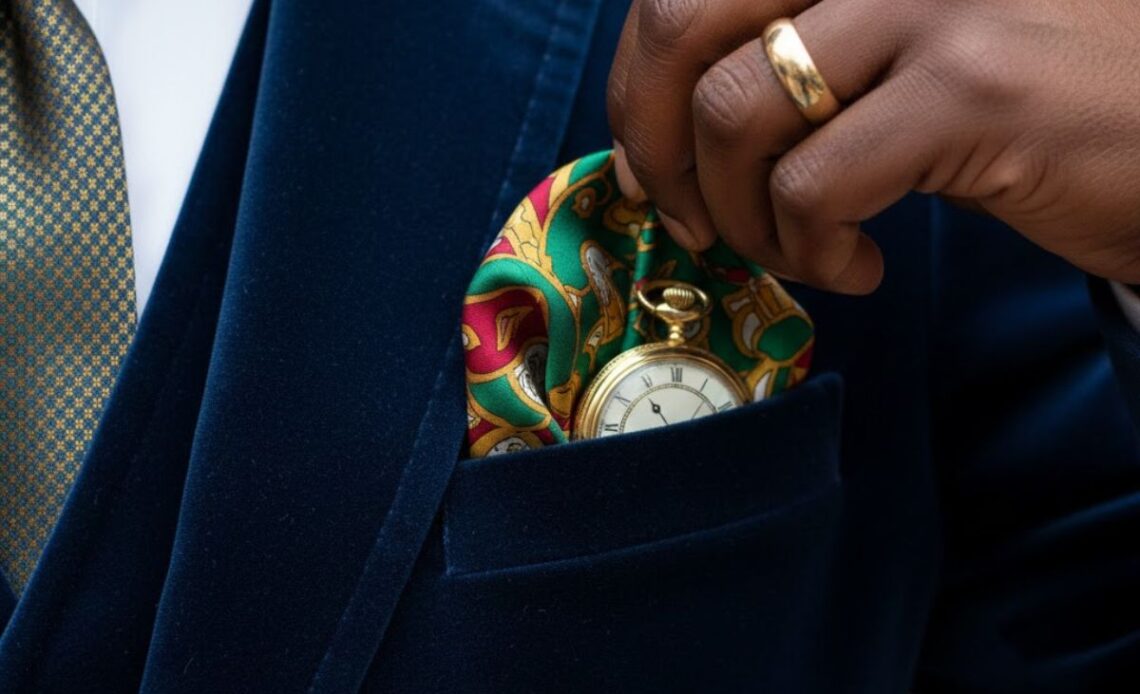
Accessories play an important role in black dandy. It acts as the movement’s signature. In fact, the meticulous choice of hat (fedora, trilby), the impeccable tie knot, the silk pouch whose fold is a manifesto, or even the elegant cane (no longer a prop, but an attribute of power) testify to a maniacal attention to detail. These elements are not merely decorative; they are evidence of the time, money and care invested in the construction of the self.
Attitude and performance
Beyond clothing, the black dandy is defined by attitude. It’s characterized by self-control and relaxation. The body itself becomes a living sculpture. The gait is confident, the posture upright, every movement an extension of the outfit. The black dandy often uses irony and panache to disarm the observer, subverting racial expectations with an excess of refinement. In so doing, he proves that elegance is a universal right, not a reserved privilege. This philosophy makes the black dandy not just an arbiter of taste, but a silent resister, armed only with his impeccable style.
Significance and contemporary heritage
The black dandy is not a figure frozen in the past, but an archetype that continues to evolve. He adapts his aesthetic codes to react to the social and political realities of the XXIᵉ century. His elegance maintains a dual function: that of silent resistance and that of a driving force in general culture.
Impact on fashion and popular culture
The legacy of the black dandy has spread to permeate fashion and popular culture on a global scale. Designers such as Ozwald Boateng at Savile Row have built international careers by infusing the bright colors and confidence of African dandyism into classic costume. This stylistic crossbreeding has made black elegance ubiquitous and normative.
In music and film, the dandy aesthetic has become a narrative tool. Rapper Jidenna, with his “classic man” look inspired by Harlem and SAPE style, popularized a precise, timeless elegance. In cinema, works such as Black Panther have elevated the dandy aesthetic to the scale of Afro-futurism, where elegant clothing symbolizes power and advanced technology.
The black dandy in the digital age
The 20th century, marked by the rise of social platforms, offered the black dandy a new platform for dissemination. This enabled him to break free from traditional geographical and media boundaries.
Using social platforms to disseminate the image of the black dandy
Social networks such as Instagram, TikTok and YouTube have radically transformed the way the image of the black dandy is perceived and consumed. Indeed, these platforms have enabled individuals from all over the world to become their own fashion editors and icons of elegance. Unlike previous eras, when the image was filtered through the media, the digital age enables communities such as the sapeurs of the Congo or young urban dandies in New York to share their sophistication directly. This democratizes access to this aesthetic and increases its cultural resonance.
Ultimately, the black dandy is more than an aesthetic figure; it’s an act of cultural and political sovereignty. Crossing eras, from 19thᵉ century Europe to contemporary social networks, his elegance subverts stereotypes. It thus embodies a living heritage where style is a language of self-determination, a timeless celebration of black dignity and creative flair on a global scale.