



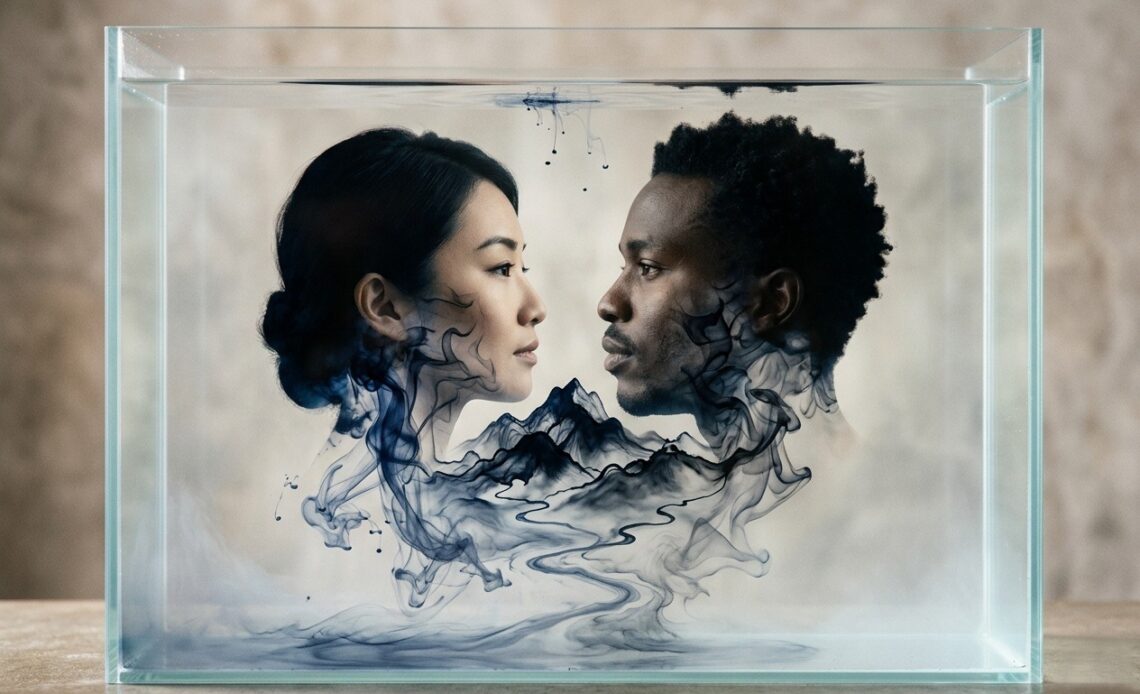
Imagination is not the result of nothingness. Rather, it is a panorama of mirages, which we define over time by linking several sequences. Understanding this alchemy is essential, because our ability to desire freely depends on it. In reality, when our eyes open to the world, they don’t necessarily show us reality: we define it ourselves, through a repertoire of aesthetics, sounds and symbols that have been bequeathed to us. So how does this alchemy manifest itself? How can an icon, a film or even a song magically lead us to determine what is desirable, noble or beautiful?
The first language is aesthetics
It’s what we see that feeds our imagination. Indeed, culture can act as a gigantic wardrobe of images that characterize the standards of the “sensational”. From a samurai epic to a 0 in the most Western sense of the term, each civilizational society weaves its own paradigm of gentleness or power.
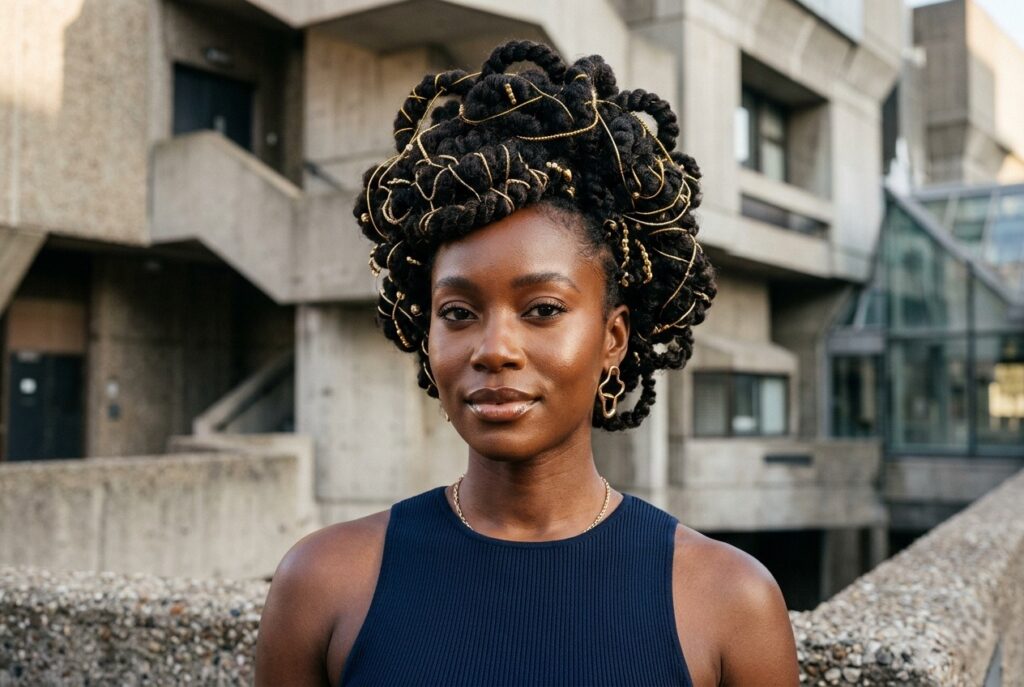
The impact of black culture, for example, has turned contemporary beauty codes on their head. Through bitter struggles and the power of its arts, it has gone from a culture associated with wild exoticism or sexual servitude, to one that imposes a new sensory universe. In concrete terms, it’s no longer a question of seeing the majestic texture of frizzy hair or the glow of black skin merely as cultural traits; they are sources of profound seduction that have laid the new foundations of fashion in general, and eroticism in particular.
Imposed fantasies
Structuring the imaginary is not necessarily an act of liberation. Culture can also act as a prison. Indeed, when influence is out of balance, it encourages “desire bias”. This is precisely where the notion of hypersexualization comes in. Clearly, by constructing a collective imaginary in which certain bodies are essentially reduced to their biological state or to feats linked to pleasure, culture imposes predatory or fetishizing attitudes.
We can thus speak of “sexual racism”. In concrete terms, it’s the expression of a desire that believes itself to be sovereign, but which, in reality, merely perpetuates hundreds of years of cultural hierarchization. In other words, we’re not attracted to a person, but rather to the myth shaped around his or her skin by culture. Taking this fact into consideration means gradually stepping out of the colonization of your own imaginary world to make unique encounters.
Vibration of the world: music and movement
Imagination is not just a library of images, it’s also a vibration. Music is one of the most powerful cultural vectors, thanks to its ability to reach the nerves instead of the intellect.
In this particular context, the impact of black cultures is decisive. They have changed our relationship with the body, through the (re)introduction of deep bass, syncopation and rhythm into international pop culture. Beyond bodily vibration, this music often conveys powerful narratives of resilience and nobility. Desire is no longer a distant contemplation, it becomes a movement, a trance. As Audre Lorde pointed out, eroticism is a vital power born of the ability to feel fully alive. This “energy” has become the fuel of the modern imagination: we look to culture for experiences that thrill us, that take us away from the coldness of screens to rediscover the warmth of instinct.
Towards an imaginary world: the fusion of the senses
Today, we’re living in an era of blending imaginations. Borders are blurring. A teenager in Tokyo can dream himself through the codes of New York hip-hop, while a Parisian designer draws his inspiration from Brazilian architectural brutalism.
This fusion creates a new “fluid” imaginary. We are no longer content with a single prism of beauty. We learn to see nobility in contrast, sensuality in difference. The resilience and brilliance of black cultural influence has opened a door to an imaginary world where skin is no longer a limit, but a garment of light.
To conclude, to understand how cultural influences shape our imaginary is to regain power over our own desires. We are the fruit of a long history, littered with clichés and masterpieces. By choosing to explore cultures that were foreign to us, by plunging into the sensuality of the Other with respect and fascination, we expand the walls of our own inner theater. Imagination is not inevitable. It’s a garden that we cultivate. And in this garden, the darkest, most vibrant and most authentic influences are those that, in the end, grow the most beautiful flowers of passion. The issue is simple: are we the spectators of our inner theater, or its dramatists?