




Breasts have always been a fascinating part of a woman’s body. When they get bigger, they raise even more questions. You’ve probably already wondered about them. In this article, we reveal 5 unusual and scientific facts about large breasts.
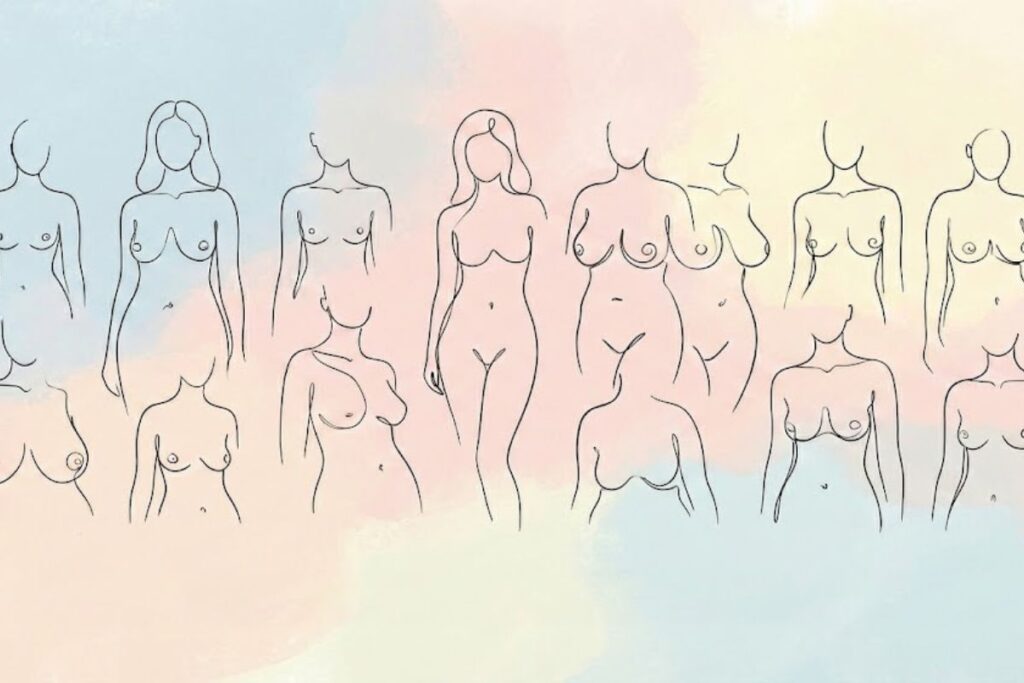
One breast (the left) is often larger than the other (the right).
In women, the left breast is generally larger than the right. The proportion of women affected by this asymmetry is estimated at 65%. However, another study, carried out on 104 women, contradicts this assertion, revealing that it is rather the right breast that is larger than the left. Whatever the case, it’s clear that in almost all women, one breast is larger than the other.
This difference is only a few millimeters and is not a cause for concern. It’s called breast asymmetry. And it’s not just a peculiarity of this area of the human body: feet, hands and even ears don’t all have the same volume.
Breast stimulation can lead to orgasm
In cisgender women, orgasm is essentially linked to the clitoris. It can occur via internal or external stimulation. As the clitoris is linked to the breasts, breast stimulation can potentially lead to orgasm. Although this thesis is not supported by a generalist study, rigorous observations and investigations by sexology researchers Marshall Miller and Dorian Solot underline this possibility.
The survey carried out by these researchers posed the following question: can scientific credence be given to women who claim to achieve orgasm solely through stimulation of their breasts? Of the women questioned, 1% said they were able to orgasm using this method. Breast erection is called thelotism. This phenomenon is explained by the presence of muscle fibers in the areola and nipple. Their contraction causes the nipple to stiffen. Sexual arousal, simple touch or cold are the main causes of this type of situation.
Not wearing a bra is not a sign of sexualization
Although many women have chosen to forgo the bra in recent years, some in society still try to make those who wear a top that shows the shape of their nipples feel guilty, seeing it as a lack of decency. It’s important to remember that such judgments are misogynistic and should not force women to wear clothes or undergarments in which they are not comfortable. Breasts are not on the list of human genitalia. So, just as men aren’t told to button up their shirts when they reveal their breasts and the hair on them, women who decide to abandon bras should not be reproached.
Large breasts attract the eye
Studies have shown that women, just like men, first pay attention to the breasts before moving on to the face when confronted with a photo of a woman. This conclusion was reached by researchers who equipped male and female participants with tracking devices. The only difference observed was that men tended to linger longer on the photo.

During pregnancy, areolae can become darker
Pregnancy is a major factor in changing a woman’s body. During this period, the areolas are likely to take on an unusual color. This is a normal phenomenon, due to the presence of the hormone chorionic gonadotropin (more commonly known as the HCG hormone). This hormone is responsible for the darkening of the areola, and often of a given area of the belly.
In conclusion, these five facts, ranging from natural asymmetry to complex physiological reactions, demonstrate that breasts remain a rich subject both biologically and culturally. The study of their role, particularly during pregnancy or sexual arousal, continues to lift the veil on the many facets of this part of the body, while underlining the importance of deconstructing the social judgments that surround it.